


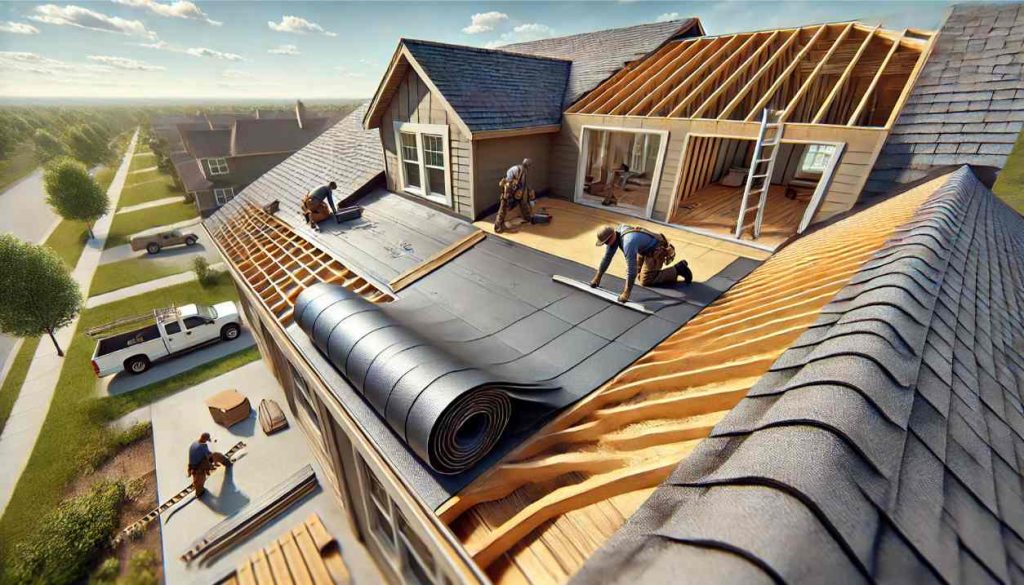
Shingles get the attention because they are the part everyone sees, and they take direct hits from the sun, wind, hail, and debris. Yet the quiet work of keeping water out often depends more on what sits underneath. Underlayment is the continuous barrier that bridges gaps, seals around fasteners, and backs up the roof covering when weather pushes past the surface layer. A roof can look fine from the street while moisture sneaks in through nail lines, lifted edges, or tiny cracks that only appear during driven rain. Underlayment helps control those moments. It also plays a key role during construction and repairs, when the roof deck may be exposed for short periods, and it protects areas where shingles are stressed, such as valleys, eaves, hips, ridges, and around penetrations. When people compare roofs based only on shingle brand or color, they often miss the more important question: what system prevents water from getting through once the surface layer is challenged?
The Layer That Really Does the Work
- Where protection begins beneath
Underlayment matters because it serves as a second skin over the roof deck, which is the structure you are truly protecting. Shingles shed most rain, but water does not always behave like a gentle waterfall running downhill. Wind-driven rain can move sideways or even upward under edges. Ice dams can force meltwater back under shingles near the eaves. Fine snow can drift into small openings and later melt. In these situations, the underlayment is the layer that prevents moisture from reaching the wood, insulation, and interior ceiling. It also reduces the risk that a minor shingle issue becomes a major leak by slowing the flow long enough for the roof to dry between storms. Synthetic underlayments can resist tearing and stay more stable under foot traffic than older felt products, while self-adhered membranes can seal around nails and protect vulnerable zones. The point is not that shingles are unimportant, but that shingles are the first line, not the last line. When the surface layer takes a hit, the underlayment often determines whether the home stays dry or quietly absorbs damage over time.
- Underlayment vs Shingles in Real Weather
Shingles primarily manage shedding, while underlayment manages risk when shedding is imperfect. Consider heavy wind events: shingles can lift, loosen, or lose adhesive bond at edges and corners. Even if the shingle stays in place, those lifted moments can allow water to intrude. Underlayment helps prevent that intrusion from reaching the deck. During hail, a shingle may bruise without cracking through, yet the impact can shorten its life and loosen granules that later expose the mat. The underlayment acts as a backup, showing signs of deterioration months later as small leaks appear.
Another example is roof geometry. Valleys concentrate water flow and debris, and penetrations introduce flashing transitions that must move with thermal expansion. Underlayment supports these complicated areas by providing continuous coverage under metal details and around fastener zones. Many homeowners scheduling Roofing Services in Hanover by Bealing Roofing & Exteriors appreciate it when the underlayment plan is explained in plain language, because it clarifies why the roof system is more than just the shingle selection. In short, shingles handle exposure, but underlayment handles the moments when exposure turns unpredictable, which happens more often than people assume.
- Materials, Installation, and Common Weak Points
The value of underlayment depends on choosing the right material for the roof design and installing it with disciplined overlap and sealing. Traditional felt can still work, but it can wrinkle if it gets wet during installation, and those wrinkles may telegraph through shingles or create channels for water. Many modern synthetics remain flatter, resist tearing, and provide better walkability for crews, helping maintain consistent fastening and layout. Self-adhered membranes are often used at eaves, valleys, and around penetrations because they seal around nails, reducing the chance of seepage in high-risk zones. Fastening patterns matter too. Overdriven staples, wide spacing, or poorly lapped seams can compromise the entire layer, even if the shingles are installed cleanly. Underlayment should be integrated with drip edge details, starter courses, and flashing transitions so that water is guided out rather than trapped. Ventilation also ties in, because trapped heat and moisture can degrade both shingles and underlayment, and condensation can mimic a roof leak from the inside. When underlayment is installed as part of a system, weak points become fewer: less deck exposure at seams, stronger water shedding at edges, and better backup performance when weather pushes beyond normal conditions.
Why the Hidden Layer Wins
It is easy to judge a roof by its shingles because they are visible and heavily marketed, but a home’s long-term dryness depends more on the hidden layer that continues to work even when the surface layer is stressed. Underlayment protects the roof deck from wind-driven rain, ice dam backups, drifting snowmelt, and small failures that occur as shingles age. It also provides continuity in valleys, at eaves, and around penetrations where leaks are more likely to start. When the underlayment choice matches the roof design, and it is installed with proper overlaps, sealing, and integration with flashing, the roof system becomes more forgiving. That forgiveness matters because real weather is messy, and small defects can appear without warning. Shingles still matter for shedding and durability, but they are not the only defense, and they are not always the final barrier. Underlayment is the layer that quietly decides whether moisture stays outside or seeps into wood, insulation, and ceilings. A roof that performs well over time is usually the one built from the deck up, not from the curb down.
