


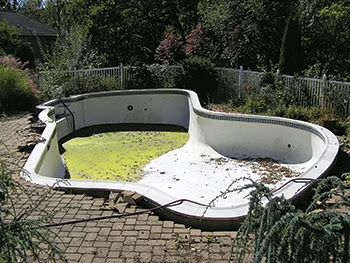
A pool shell sits in the ground like a boat turned upside down, and the soil around it becomes part of the structure. When soil behaves predictably, the shell remains supported, level, and relatively stress-free. When soil shifts, swells, shrinks, or washes away, the shell can crack, settle unevenly, or develop hollow spots that lead to long-term movement. Many pool problems blamed on workmanship are actually soil problems that existed before excavation or developed later due to drainage, groundwater changes, or landscaping choices. Understanding soil behavior matters because the pool is not resting on a single slab. It is surrounded by backfill, native soil, and water pressures that change seasonally. The more the soil expands and contracts, the more the shell must resist bending forces that it was not meant to carry repeatedly.
Soil movement shapes the shell.
- Soil types and what they do under load
Different soils react differently when a pool is cut into them. Sandy soils drain quickly, which can reduce swelling, but they can also lose support if water flow carries away fine particles, creating voids that leave the shell unsupported in spots. Clay soils hold water and can expand when wet and shrink when dry, pushing and pulling on the shell as seasons change. That expansion and contraction create lateral pressure on pool walls and can also lift or settle sections of the shell, especially where the moisture content varies from one side of the pool to the other. Silty soils can be tricky because they may look firm when dry but lose strength when saturated, behaving almost like a slurry during heavy rain or irrigation events. Fill soil adds another layer of risk. If a pool is built on ground previously graded with imported fill, the fill may settle over time, especially if it was not compacted in controlled lifts. Settlement can cause a slow tilt, a deck gap, or stress points where the shell transitions from well-supported to poorly supported. Contractors evaluate soil bearing strength, drainage behavior, and compaction needs so the pool sits on a stable base rather than relying on luck.
- Moisture cycles, groundwater, and hydrostatic pressure
Water is the engine that drives many soil-related pool issues. When soil moisture changes, soil volume and strength can change with it. Clay that swells after rain can press on the shell, while the same clay shrinking in a dry season can pull away, leaving gaps. Groundwater adds another force called hydrostatic pressure, which pushes upward on the pool floor. If a pool is drained when groundwater is high, the upward pressure can lift the shell, causing cracks or shifting the structure. Even partial draining can increase risk if the water level inside the pool no longer balances the pressure outside. Builders often plan for groundwater with features such as hydrostatic relief valves, sump points, or drainage systems that carry water away from the pool excavation. Custom inground pools by Nassau Pools and Spas often account for local water table behavior by planning grading, drainage, and backfill strategy. Hence, the soil stays as stable as possible around the shell. Poor yard drainage, downspouts aimed toward the pool, and overwatering nearby landscaping can keep soil on one side wet, leading to uneven lateral loads that gradually twist or stress the shell.
- Backfill quality and compaction around the shell
The soil placed back around a pool after excavation is not just dirt that fills space. It becomes the material that supports the shell walls and the deck structure. If backfill is dumped in large amounts without proper compaction, it will settle over time, creating voids that allow the shell to flex. That flexing can show up as hairline cracks, tile line separation, or coping movement. The type of backfill matters too. Some builders use gravel or controlled fill because it drains well and compacts consistently, reducing long-term settlement. Others may rely on native soil, which can be fine if moisture and compaction are controlled, but risky in expansive clay or mixed soils. Improper backfill can also channel water toward the pool, especially if it creates a pathway that carries runoff along the shell wall. That water movement can erode fines and reduce support. Deck problems often trace back to backfill issues, because decks and coping sit partly on soil that may settle differently from the shell. When a deck drops while the pool shell stays put, the gap becomes visible. When the shell moves under soil pressure while the deck remains stable, the tile and coping can crack. Stable pool performance often depends on stable backfill that behaves predictably across seasons.
Soil conditions affect pool shell stability because the ground around the pool is part of the support system. Sandy soils can erode and leave voids, clay soils can swell and shrink, and silty or filled soils can lose strength when saturated or settle over time. Moisture cycles, groundwater pressure, and uneven drainage can exert forces on the shell, while poor backfill compaction can cause long-term settlement that stresses both the shell and the deck. Recognizing patterns such as repeated cracking, uneven deck movement, and soggy zones around the pool can help identify soil-related issues early. With good drainage, controlled moisture, proper backfill practices, and cautious water-level management, the soil becomes more predictable, and the shell can remain stable through seasonal changes.
