


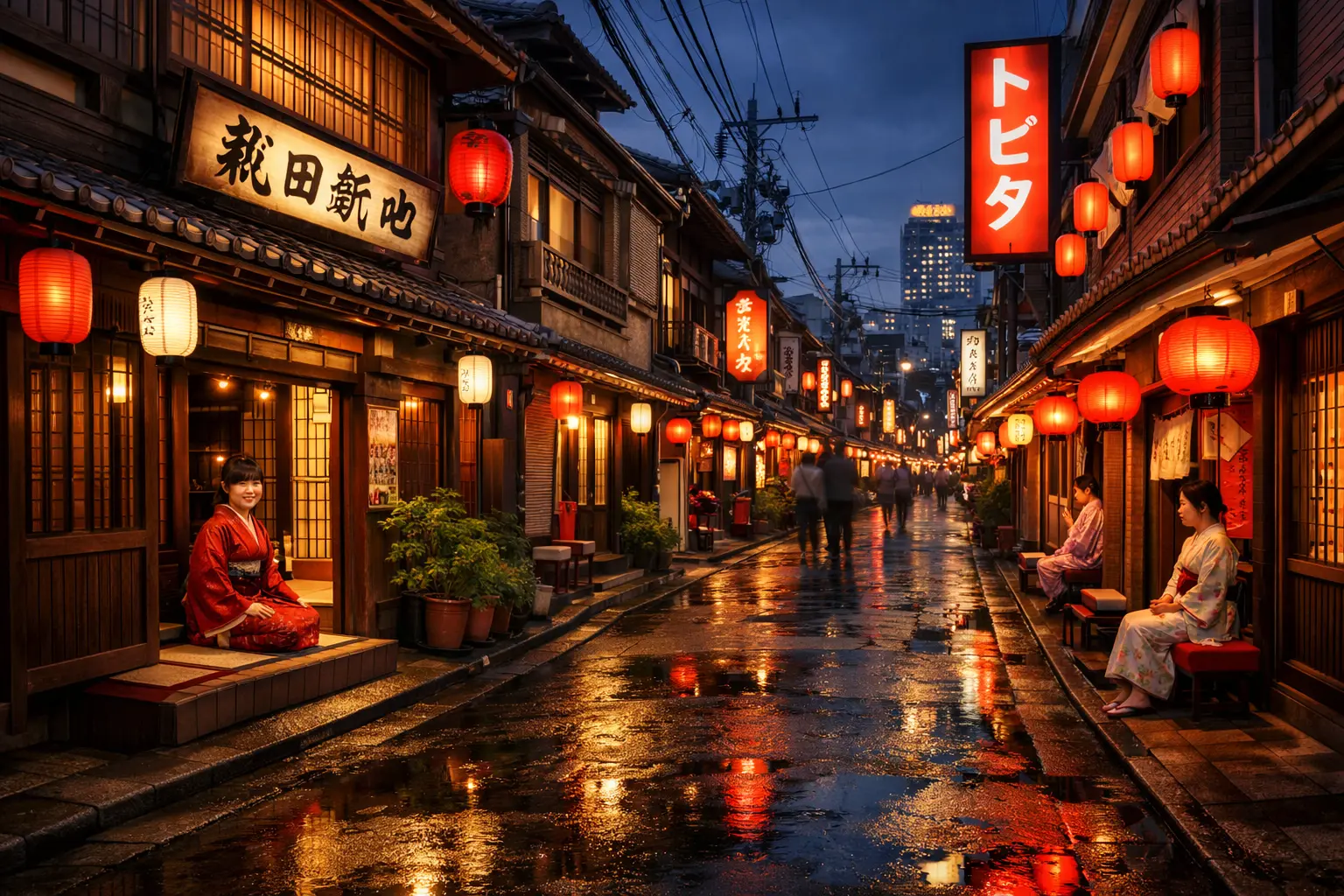
Tobita Shinchi Osaka is a historic district located in the heart of Osaka, Japan. Famous for its past as a red-light district, it holds an interesting and often misunderstood place in Japanese culture. Tobita Shinchi became notorious in the early 20th century for its role in Osaka’s entertainment world. Though it still maintains its historical identity, it has adapted over time. Today, it exists as a blend of tradition, controversy, and modernization.
Originally established in the Taishō period, Tobita Shinchi has been home to a complex culture of entertainment. Though it might be easy to stereotype the district as just another adult area, it is a unique part of Osaka’s heritage. Visitors to the area will encounter a juxtaposition of old and new, where narrow, winding streets house establishments that still reflect the traditional “yūkaku” (licensed pleasure quarters). What makes this area particularly fascinating is how it evolved and continues to operate. Though it was once at the heart of Japan’s entertainment industry, it is now a place where people can see a mixture of historical practices, legal complexities, and changing attitudes.
This section serves as an introduction to the significance of Tobita Shinchi Osaka, laying the foundation for exploring its history, cultural shifts, and what visitors should know about it today.
History of Tobita Shinchi Osaka
Tobita Shinchi Osaka has a long and colorful history that dates back to the Taishō period (1912-1926). The district was first developed as a licensed red-light district, a place where prostitution was legalized and regulated by the government. Its creation was part of Japan’s effort to control and manage adult entertainment in a structured manner. The area became an essential part of Osaka’s nightlife, drawing in both locals and visitors. Over the years, the district has seen many changes, but its fundamental identity as a red-light district has remained, though with significant shifts in the legal landscape. In the post-World War II era, Japan implemented the Anti-Prostitution Law in 1958, which criminalized prostitution. However, like many other red-light districts in Japan, Tobita Shinchi adapted to these changes by transforming into what could be considered a “legal loophole” establishment. Many of the businesses here were reclassified as “restaurants,” despite the fact that they still operated as brothels.
During this time, Tobita Shinchi became known for its traditional “ryōtei” style restaurants, where women would entertain guests in private rooms, and interaction often blurred the lines between formal dining and intimate encounters. The transformation helped preserve the area’s cultural significance while complying with Japanese law. This adaptation allowed Tobita Shinchi to continue to thrive in a modernizing world. Today, while prostitution remains illegal, the district is still very much alive, albeit in a more hidden form. The area has managed to preserve its historical roots while adapting to legal changes and the evolving cultural landscape of Osaka.
Where Is Tobita Shinchi and How to Get There
Tobita Shinchi is located in Osaka’s Nishinari district, a bustling area that has seen significant changes over the years. Situated near the iconic Osaka City Air Terminal (OCAT), Tobita Shinchi is easily accessible by public transportation. If you’re planning to visit, you’ll want to know the best ways to get there. The nearest train stations are Dōbutsuen-mae Station and Shin-Imamiya Station, both of which are part of the Osaka Metro and JR lines. These stations provide convenient access to Tobita Shinchi, and from there, it’s just a short walk to the heart of the district.
Visitors can also take a taxi from popular spots like Namba Station or Shinsaibashi, which are key tourist areas in Osaka. It’s a quick ride, and the district is well-known to drivers, so you won’t have trouble finding your way. Once you’re in the area, the streets of Tobita Shinchi offer a fascinating glimpse into Osaka’s past. You’ll notice the narrow, winding streets, traditional-style buildings, and neon signs that light up the night. Whether you’re there for a history lesson or a unique cultural experience, this district offers plenty to explore.
What Tobita Shinchi Looks Like Today
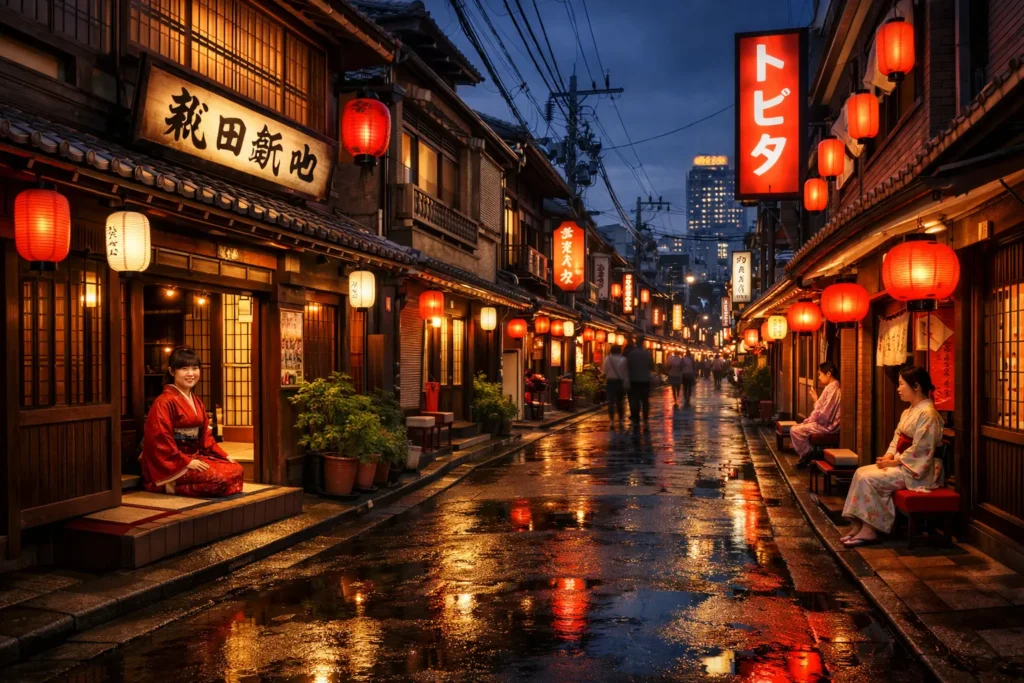
Tobita Shinchi today is a blend of old-world charm and modern urbanism. The district maintains its traditional streets and buildings, many of which reflect the Edo and Meiji periods, giving visitors a sense of stepping back in time. The atmosphere is both nostalgic and a bit mysterious, with dimly lit alleyways and red lanterns casting an eerie glow over the narrow roads.
However, despite its historical appearance, the district has changed considerably over the decades. Many of the establishments here no longer openly advertise their services, opting for more discreet methods of attracting visitors. In some ways, Tobita Shinchi has modernized, while in others, it clings to the older traditions that made it famous.
Visitors will still find small restaurants that serve traditional Japanese meals and entertain guests, but the scene is far less overt than it was in the past. While the area maintains a certain charm, it is also a place that demands respect, given its controversial history. If you’re looking for a more immersive experience, the streets are lined with unique businesses offering an authentic slice of Osaka culture, from tea houses to small restaurants.
How Tobita Shinchi Works
Tobita Shinchi is often misunderstood by outsiders, but understanding its current operations requires an explanation of the complex legal and cultural dynamics at play. As mentioned earlier, the district operates within the confines of Japanese law, which does not permit open prostitution. However, the district continues to function through a unique loophole: the “restaurant business model.”
In many ways, businesses in Tobita Shinchi still function as restaurants where women engage with guests, but the services provided go beyond simple dining experiences. These establishments cater to the desires of customers seeking company, and women perform their roles as hostesses in private rooms. Visitors should understand that while these establishments may offer intimate interactions, they do so within the legal framework of Japan’s anti-prostitution laws.
Despite the legal complexity, Tobita Shinchi has remained a significant part of Osaka’s adult entertainment scene, with its unique style of entertainment still attracting both locals and tourists. Visitors should be aware that while the area has much to offer in terms of its historical ambiance, it’s also a place that operates behind closed doors, and discretion is key.
Cultural & Legal Context of Tobita Shinchi Osaka
Tobita Shinchi Osaka exists in a unique cultural and legal space. Japan’s strict laws regarding prostitution make the existence of red-light districts like Tobita Shinchi particularly intriguing. In fact, while prostitution is illegal under Japanese law, these areas remain part of the cultural fabric, and the law has created a sort of grey area where businesses can operate under a different guise.
The cultural context of Tobita Shinchi is deeply tied to the traditional Japanese entertainment industry, where pleasure quarters like yūkaku served as places for men to relax and enjoy themselves in the company of women. However, modern-day perceptions of these districts have evolved, with many locals viewing them as historical sites that preserve the cultural essence of old Osaka.
Despite this, the district’s role in contemporary Japan remains controversial, and it’s important for visitors to approach it with respect and understanding. The area operates under a very specific set of rules, and public behavior should always reflect the unique legal landscape of the district.
Visitor Tips & What to Know Before You Go
If you’re planning a visit to Tobita Shinchi Osaka, there are a few things you should know. The district, while historically rich and culturally significant, is also a sensitive area due to its adult entertainment roots. Here are some essential tips for visitors:
- Respect the Privacy of Workers: Avoid taking photos of the establishments or workers. Many businesses in the area have strict no-photo policies to protect the privacy of both the workers and the clients.
- Understand the Laws: Be aware of the legal framework in which the district operates. While prostitution is illegal in Japan, businesses in Tobita Shinchi work within a grey area, so it’s important to be respectful of the laws and the community.
- Avoid Being Too Obtrusive: The area is not a typical tourist attraction. It’s a place with its own unique atmosphere, so approach it with caution and sensitivity. Always remember to be respectful of the people and culture around you.
- Safety Tips: While Tobita Shinchi is relatively safe, like any other nightlife district, it’s essential to be aware of your surroundings. Stick to well-lit areas, especially if you’re unfamiliar with the area at night.
Myths vs. Facts: Understanding Tobita Shinchi Osaka
There are many myths surrounding Tobita Shinchi, especially given its reputation as a red-light district. Some people may view it as a dangerous, unregulated area full of illicit activities, while others might romanticize it as a piece of Osaka’s cultural history. It’s important to separate fact from fiction:
- Myth: Tobita Shinchi is a dangerous place.
Fact: While it’s a red-light district, Tobita Shinchi is generally safe for visitors who follow the rules and behave respectfully. - Myth: It’s all about prostitution.
Fact: While the district has historical ties to adult entertainment, it also houses traditional businesses, including tea houses and restaurants, that are a part of Osaka’s cultural heritage. - Myth: Everything in Tobita Shinchi is illegal.
Fact: The district operates within a unique legal framework, using the “restaurant” business model to continue its operations legally.
Conclusion: The Legacy of Tobita Shinchi Osaka
Tobita Shinchi Osaka is more than just a red-light district; it’s a piece of history that reflects the evolution of Japanese entertainment culture. Over the decades, it has adapted to changing laws and societal norms while preserving its unique identity. Today, it remains a fascinating district where visitors can experience a blend of old-world charm and modern sensibilities.
Whether you’re visiting for the historical context, the cultural experience, or simply out of curiosity, Tobita Shinchi offers a glimpse into a different side of Osaka — one that is rich in both controversy and tradition.
Also Read: Cleveland Cavaliers vs Pacers Timeline
