


Data has become one of the most valuable assets for modern organizations. However, raw data alone does not create business value. It must be collected, cleaned, structured, and transformed before it can support decision-making. This is where ETL plays a critical role.
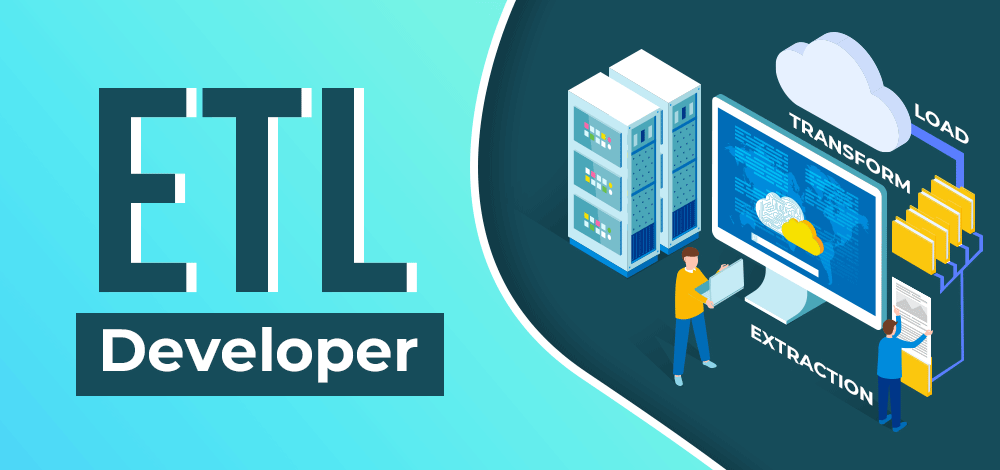
ETL, which stands for Extract, Transform, and Load, is the foundation of data warehousing and business intelligence systems. Organizations that rely on data-driven strategies increasingly recognize the importance of specialized expertise, leading many to hire ETL developers to manage and optimize their data pipelines.
The Challenge of Fragmented Data Sources
Most organizations generate data across multiple systems, including CRM platforms, ERP tools, marketing automation software, transactional databases, and third-party applications. These systems often use different formats, structures, and standards.
Without integration, this data remains siloed and inconsistent. ETL developers design processes that extract data from diverse sources, transform it into a standardized structure, and load it into centralized data warehouses or analytics platforms.
When companies hire ETL developers, they enable seamless data integration, ensuring that leadership teams have a unified and reliable view of business performance.
Transforming Raw Data into Structured Intelligence
Raw data is rarely analysis-ready. It often contains duplicates, missing values, inconsistencies, and formatting issues. Poor data quality leads to inaccurate reporting and flawed insights.
ETL developers implement transformation logic that:
- Cleans and validates data
- Applies business rules
- Standardizes formats
- Aggregates and filters relevant information
- Removes redundancy
This transformation stage is critical. It ensures that dashboards, reports, and analytics models are built on accurate and trustworthy data. Organizations that hire ETL developers reduce errors and increase confidence in their decision-making processes.
Building Scalable Data Pipelines
As data volumes grow, manual processes and poorly designed pipelines become bottlenecks. ETL developers architect scalable workflows that can handle increasing workloads without compromising performance.
They leverage tools such as Informatica, Talend, Apache Airflow, SSIS, and cloud-native ETL solutions to automate and orchestrate data workflows efficiently. They also design incremental data loads and parallel processing systems to optimize performance.
When businesses hire ETL developers, they invest in infrastructure that grows with their data needs, ensuring long-term efficiency and scalability.
Enabling Real-Time and Near Real-Time Analytics
In competitive industries, timely insights are as important as accurate insights. Organizations need up-to-date information to respond to market changes, customer behavior, and operational trends.
ETL developers design batch and streaming pipelines that reduce latency between data generation and analysis. They integrate real-time data feeds, event-driven architectures, and cloud-based data platforms to deliver faster insights.
Choosing to hire ETL developers allows organizations to move beyond static reports and embrace dynamic, real-time decision-making frameworks.
Strengthening Data Governance and Compliance
Data governance is essential for maintaining quality, consistency, and compliance. Regulatory frameworks such as GDPR and industry-specific standards require strict control over how data is stored, processed, and accessed.
ETL developers implement logging, validation, encryption, and access control mechanisms within data pipelines. They ensure that sensitive information is handled appropriately and that audit trails are maintained.
Organizations that hire ETL developers enhance their governance frameworks while reducing compliance risks associated with improper data handling.
Supporting Business Intelligence and Advanced Analytics
Business intelligence tools such as Power BI, Tableau, and Looker depend on well-structured data models. Similarly, advanced analytics and machine learning initiatives require clean and consistent datasets.
ETL developers create optimized data schemas, dimensional models, and data marts tailored for reporting and predictive analysis. Their work ensures that analysts and data scientists spend less time preparing data and more time generating insights.
When companies hire ETL developers, they accelerate the path from raw data to actionable intelligence across departments, including sales, marketing, finance, and operations.
Reducing Operational Inefficiencies
Manual data preparation processes consume significant time and increase the risk of human error. Spreadsheets, disconnected scripts, and ad-hoc workflows cannot support enterprise-scale analytics.
ETL developers automate repetitive tasks, schedule data flows, and implement monitoring systems to detect and resolve failures proactively. This reduces operational friction and allows teams to focus on strategic initiatives rather than data troubleshooting.
Organizations that hire ETL developers gain operational efficiency and improved reliability across their analytics ecosystem.
Driving Data-Driven Culture Across the Organization
A strong data infrastructure does more than generate reports. It fosters a culture where decisions are based on evidence rather than assumptions. Reliable data pipelines enable cross-functional collaboration and transparency.
Executives gain access to accurate performance metrics. Product teams analyze user behavior trends. Marketing teams optimize campaigns using measurable insights. Finance teams forecast with greater precision.
By choosing to hire ETL developers, organizations build the technical foundation required to support a truly data-driven culture.
Conclusion
Data transformation is not a one-time project. It is an ongoing process that evolves with business growth and technological change. ETL developers play a central role in designing, optimizing, and maintaining the pipelines that convert fragmented data into meaningful insights.
From integration and transformation to scalability, governance, and analytics enablement, their expertise ensures that organizations can extract real value from their data assets. For businesses aiming to compete in an increasingly data-centric landscape, the decision to hire ETL developers is a strategic step toward sustainable growth and informed decision-making.
