


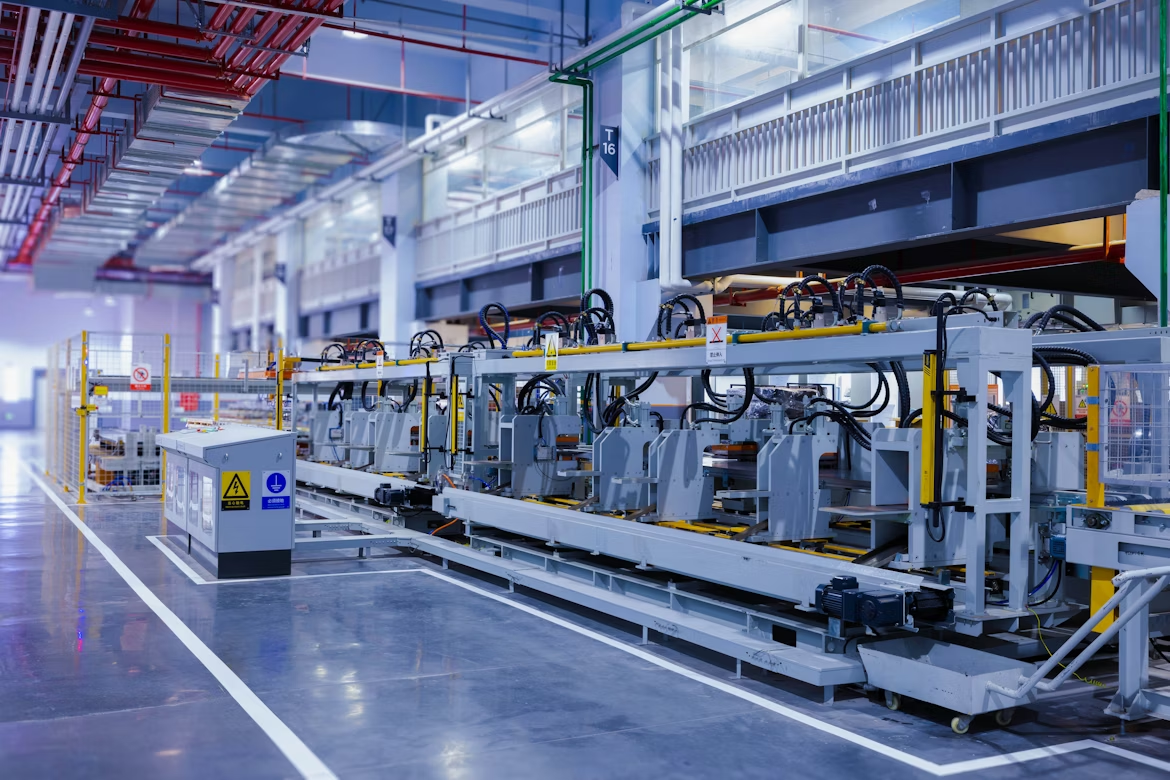
Manufacturers today operate in an environment shaped by rapid technological advancement, increasing global competition, and rising expectations for efficiency. Facilities must balance production speed with accuracy, safety, and flexibility. The shift toward smarter, data‑driven operations has opened opportunities for companies to enhance performance and make more informed decisions. Event‑responsive data platforms play a central role in this transformation by providing real time insights that help operators react quickly to changing conditions on the plant floor. These technologies support a more connected, proactive manufacturing environment where information flows seamlessly across systems.
The Growing Importance of Real Time Visibility
Modern production environments depend heavily on the ability to monitor operations as they happen. Real time visibility allows teams to identify deviations or performance issues before they escalate into larger problems. This capability is especially valuable in facilities with complex machinery or high volume output. Event‑responsive data platforms gather information from sensors, machines, and control systems to provide a clear view of production status at any given moment.
Faster access to actionable insights also promotes better coordination between departments. Maintenance teams can respond quickly to equipment irregularities, quality teams can identify defects early, and production staff can adjust workflows based on demand or resource availability. These advantages make real time visibility a cornerstone of modern industrial performance.
Integrating Advanced Control Interfaces for Better Decision Support
As data becomes more central to operations, manufacturers require intuitive tools that simplify how information is interpreted. Advanced control interfaces have evolved to meet this need by presenting data in clear, visual formats that make analysis more accessible to operators, technicians, and supervisors. One example is SCADA hmi, which integrates supervisory control with user friendly visualization tools. This combination provides a powerful framework for monitoring processes, issuing commands, and understanding performance trends.
Interfaces designed for industrial environments must prioritize clarity and responsiveness. Event‑driven alerts, predictive indicators, and customizable dashboards help ensure that operators always have the most relevant information in front of them. These tools reduce the risk of misinterpretation and support more accurate, timely decisions during critical moments. When paired with analytics, the result is a system that not only displays data but also provides valuable operational context.
Enhancing Production Efficiency Through Event‑Driven Automation
Event‑responsive platforms extend beyond data visualization by enabling automated responses to specific conditions. Automation rules can be configured to trigger adjustments when sensors detect irregularities, helping maintain production continuity without waiting for manual intervention. These automated processes preserve efficiency by minimizing downtime and ensuring that workflows adapt smoothly to changing operational demands.
This type of automation also supports more precise resource management. Systems can be programmed to adjust machine speeds, schedule maintenance cycles, or reroute production tasks based on data triggers. By optimizing production conditions in real time, event‑driven automation contributes to consistent output quality and improved resource utilization. Over time, these capabilities help manufacturers reduce waste and lower operating costs.
Strengthening Safety and Compliance with Data Driven Controls
Safety and regulatory compliance are essential elements of industrial operations. Event‑responsive data platforms help address these priorities by continually monitoring environmental and equipment conditions. If systems detect patterns that could compromise safety, they can initiate warnings or shutoffs to prevent incidents. This proactive approach reduces risk and helps maintain a safe working environment for personnel.
Regulatory compliance also benefits from comprehensive data tracking. Detailed logs of equipment behavior, production batches, and environmental conditions provide traceability that supports reporting requirements. When inspections occur, manufacturers can demonstrate adherence to standards with accurate records and clear documentation. These capabilities reinforce operational integrity and reduce the likelihood of compliance gaps.
Preparing for the Future with Scalable Industrial Technology
Manufacturers adopting event‑responsive data systems gain access to tools that evolve alongside their operations. Scalability is vital as facilities grow, add new equipment, or integrate additional digital technologies. Modular architectures allow systems to expand without disrupting existing workflows, making it easier to accommodate new sensors, machines, and analytics tools over time.
As artificial intelligence and machine learning become more common in industrial settings, event‑responsive platforms will continue to play a foundational role. These systems ensure that data remains organized, accessible, and meaningful, which strengthens the performance of predictive analytics and automated decision engines. Companies that invest in these capabilities position themselves for long term success in an industry increasingly shaped by digital innovation.
Conclusion
Event‑responsive data platforms offer manufacturers a powerful way to improve visibility, efficiency, and safety. By integrating real time monitoring with intuitive interfaces and automated controls, these systems support more informed decision making throughout the production process. As manufacturing continues to evolve, these technologies will remain central to building smarter, more resilient operations capable of meeting modern demands.
