


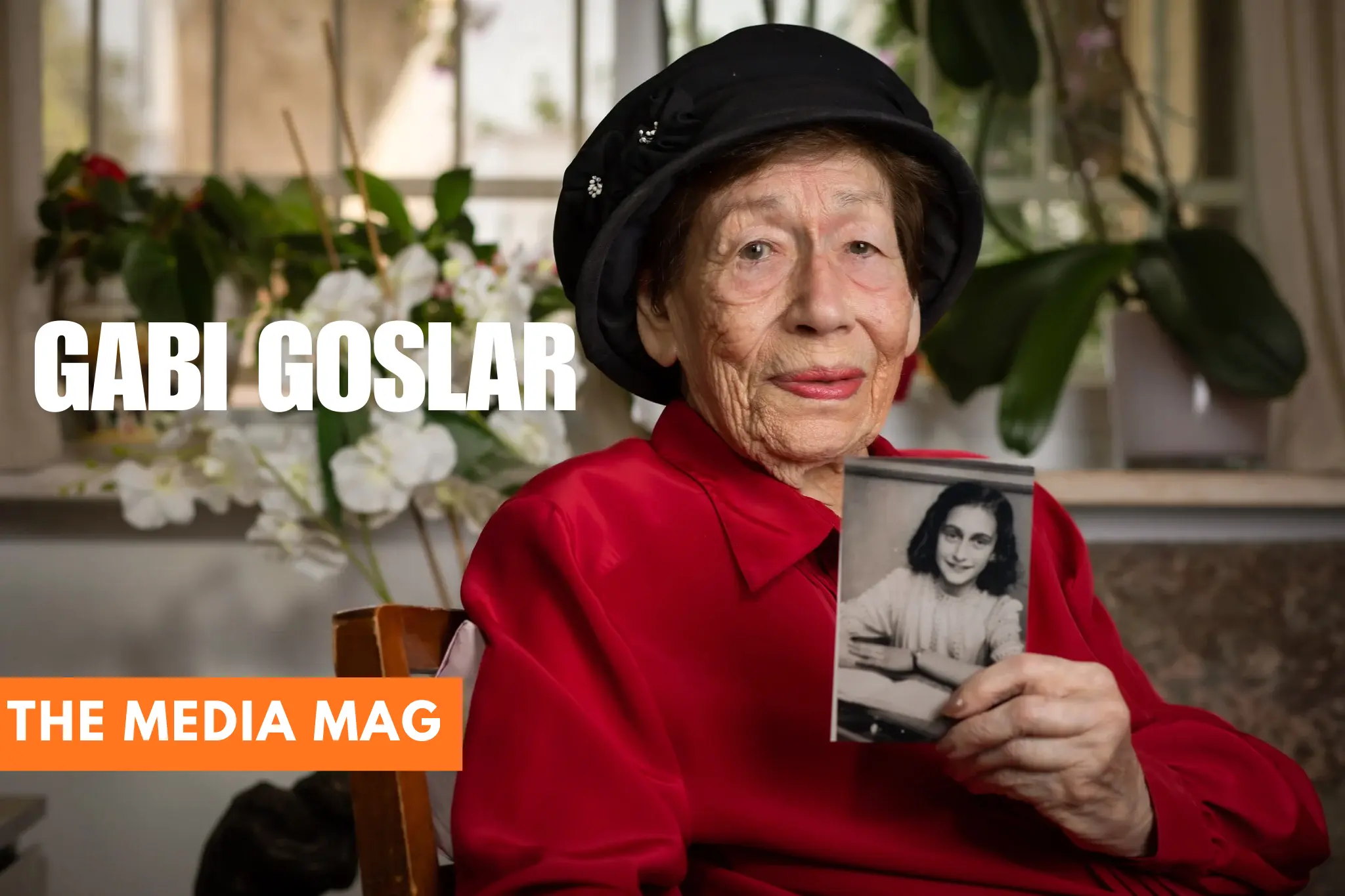
Gabi Goslar is a name that may not be as widely known as Anne Frank, but her story is equally important for understanding the personal experiences of Holocaust survivors. Born Rachel Gabrielle Ida Goslar in October 1940 in Amsterdam, she was just a small child when the Nazi occupation brought fear and danger into her life. Her early years were marked by uncertainty, constant threat, and the desperate efforts of her Jewish family to survive.
Her life is closely tied to her older sister, Hannah Pick-Goslar, who was a childhood friend of Anne Frank. Through Hannah, Gabi’s experiences intersect with the story of Anne Frank, providing a unique perspective on the struggles, resilience, and everyday courage of Jewish families in Amsterdam during World War II.
While many members of the Goslar family tragically perished in the Holocaust, Gabi survived. Her story is one of both sorrow and survival, showing how children endured unimaginable circumstances yet found ways to live and remember. This article will explore her early life, the horrors she faced, and her legacy today.
Early Life and Family Background
Gabi Goslar was born into a Jewish family that had fled Nazi Germany. Her parents, like many others, sought safety in the Netherlands as anti-Jewish laws and persecution escalated in Germany. The Goslar family settled in Amsterdam, where they tried to build a peaceful life while the shadow of war loomed closer.
Her older sister, Hannah, was a source of protection and companionship. Gabi, being very young, depended on her sister during the frightening years that followed. Though Gabi was too young to fully comprehend the political turmoil, she experienced the fear and uncertainty that many Jewish children felt during the Nazi occupation.
The family’s life in Amsterdam seemed ordinary at first, but with the arrival of German forces and the implementation of anti-Jewish measures, their sense of security quickly disappeared. Children like Gabi were suddenly at risk, and the family had to navigate a world filled with danger, hiding, and constant worry.
The Goslar Family During the Holocaust
As the Nazi regime intensified its persecution of Jews, the Goslar family faced arrests, restrictions, and eventual deportation. Amsterdam became a dangerous place for Jewish families, and like many, the Goslars were eventually sent to Westerbork transit camp, a temporary holding site before being transported to concentration camps in Germany and Poland.
The experience was brutal. Families were separated, resources were scarce, and survival depended on luck and resilience. For Gabi, who was only a small child at the time, the loss of normal childhood experiences was compounded by the terror of being in a camp.
| Event | Details |
|---|---|
| Birth | October 1940, Amsterdam, Netherlands |
| Parents | Jewish immigrants fleeing Nazi Germany |
| Sister | Hannah Pick-Goslar, friend of Anne Frank |
| Initial Camp | Westerbork transit camp, Netherlands |
| Deported To | Bergen-Belsen concentration camp, Germany |
The Goslar family’s story mirrors that of countless Jewish families who were uprooted, sent to camps, and faced extreme conditions that few could survive. Most of Gabi’s family, unfortunately, did not survive the war, highlighting the devastating impact of the Holocaust on children and families alike.
Life in Bergen‑Belsen Concentration Camp
Bergen-Belsen was one of the most notorious concentration camps during World War II. The conditions were overcrowded, unsanitary, and deadly. Food was scarce, disease was rampant, and survival depended on both luck and determination. For a young child like Gabi Goslar, life in Bergen-Belsen was terrifying.
Her sister Hannah played a critical role in protecting her, providing comfort and support when Gabi could not fully understand what was happening. Witnesses have described Hannah trying to keep Gabi safe from harsh labor and brutal treatment while maintaining hope in a seemingly hopeless environment.
Through her sister’s connection to Anne Frank, we know that the camp experience also brought brief reunions and memories of friends from the outside world. Hannah reportedly spoke to Anne through the camp fences in limited moments, and while Gabi was too young to engage fully, the presence of her sister offered some reassurance in the darkness of camp life.
Conditions were extreme:
- Malnutrition and starvation were common.
- Diseases like typhus spread rapidly.
- Children were particularly vulnerable to illness and neglect.
Surviving Bergen-Belsen as a child required resilience, and Gabi’s survival is a testament to her family’s care and determination, even in the worst circumstances.
Survival, Liberation, and Life After the War
After enduring years of hardship, Gabi Goslar survived Bergen-Belsen, a rare outcome for many children in the camp. Liberation came in April 1945, but survival did not mean immediate recovery. Gabi, like other survivors, faced the challenges of malnutrition, trauma, and the loss of most of her family members.
After liberation, Gabi and her sister Hannah eventually emigrated to Israel, where they rebuilt their lives. Gabi married, raised children, and lived a relatively private life. Yet, the experiences she endured remained part of her identity, shaping her understanding of the world and the importance of remembering the past.
Case Study:
- Gabi’s Rehabilitation: After liberation, she received medical care and support to recover physically from malnutrition. Emotional recovery took longer, involving personal resilience and community support.
- Life in Israel: Gabi contributed to community life and preserved family memories, often recalling her childhood experiences to younger generations.
Legacy and Connection to Anne Frank
Gabi Goslar’s story is closely connected to one of the most famous Holocaust narratives — Anne Frank. Her sister Hannah was a close friend of Anne, and the two sisters’ experiences provide context to the social networks and friendships disrupted by the Holocaust.
Though Gabi was too young to document her own experiences extensively, her survival and family memories help historians and educators understand the broader impact of the Holocaust on children. Her story reminds us that beyond famous diaries, countless children like Gabi endured unimaginable hardship and carried these memories into post-war life.
Quote:
“Survivors like Gabi remind us that history is not just in books, but in the lives of those who lived it.”
Common Questions About Gabi Goslar
Who was Gabi Goslar?
Gabi Goslar was a Holocaust survivor, born in Amsterdam in 1940. She survived Bergen-Belsen concentration camp as a child, though most of her family did not.
How is she connected to Anne Frank?
Her sister, Hannah Pick-Goslar, was a close friend of Anne Frank. Through Hannah, Gabi’s story intersects with Anne Frank’s life and camp experiences.
Did she write any memoirs?
Gabi herself did not publish memoirs, but her experiences are documented through her sister’s accounts and historical research on Bergen-Belsen and Anne Frank’s network of friends.
What can we learn from her story?
Gabi’s life teaches resilience, survival, and the importance of preserving memory. It also highlights the experiences of children during the Holocaust, which are often overlooked in history books.
Why is Gabi Goslar important today?
Her story is a reminder of the personal human costs of war, the importance of historical memory, and the enduring lessons of resilience and hope.
Conclusion
Gabi Goslar may not be a household name, but her story is an essential piece of Holocaust history. From her early life in Amsterdam to the horrors of Bergen-Belsen and her eventual survival, Gabi represents the resilience of children who endured unimaginable hardships. Her connection to Anne Frank through her sister adds an important perspective to one of the most widely recognized Holocaust narratives.
Remembering Gabi Goslar is more than remembering one life; it is about honoring all children and families affected by the Holocaust, ensuring their experiences are never forgotten. Her life is a testament to the strength of the human spirit, the power of family, and the importance of remembering history, so that such tragedies are never repeated.
Also Read: Rick Macci Net Worth
