


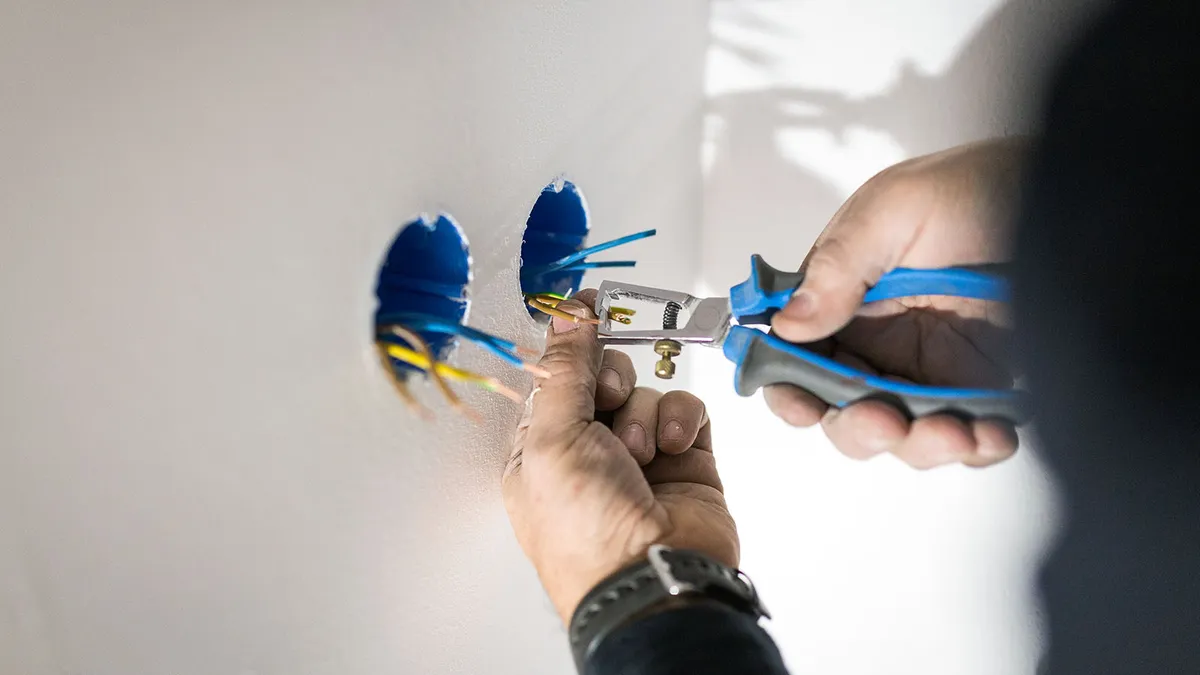
Hidden electrical faults behind drywall, paneling, or tile can be frustrating because the problem is real, even though the wiring is out of view. These faults may show up as flickering lights, warm outlets, buzzing sounds, frequent breaker trips, or devices that fail for no clear reason. Since finished walls conceal splices, staples, and junction routes, diagnosing requires a method that reduces guesswork and avoids unnecessary damage. The goal is to narrow the fault location using patterns, measurements, and safe access points like outlets, switches, and the service panel. With the right approach, many issues can be traced to a loose connection, a damaged conductor, an overloaded circuit, or a shared neutral problem without opening large sections of the wall.
Steps To Find The Fault
- Start With Symptoms And Safety Checks
Diagnosis begins by documenting when the issue occurs and what changes it causes. Note which rooms are affected, whether it happens under load, and whether it correlates with specific appliances, weather, or time of day. Flickering in one fixture may indicate a lamp or switch issue, while flickering across multiple rooms can suggest a neutral problem or a feeder issue. Warm cover plates, sparking, or a burning smell should be treated as urgent warning signs because heat often indicates resistance at a connection. Before testing anything, turn off the suspected breaker, confirm the power is off with a non-contact voltage tester, and then verify with a plug-in tester or multimeter at the receptacle. This layered check matters because mis-labeled panels and multi-wire circuits can keep parts of a box energized even when one breaker is off. If a GFCI or AFCI trips repeatedly, record whether it trips instantly or after some time, since that behavior can distinguish between arc faults, leakage to ground, and simple overload. A clear symptom log becomes the roadmap for the next steps.
- Use Access Points To Narrow The Circuit
Finished walls still provide access through devices and fixtures. Remove outlet and switch covers and inspect for backstabbed connections, loose terminals, nicked insulation, or overheated conductors. Many hidden faults originate at the last visible point before the wire disappears into the wall. A receptacle that feels loose in the box may have strained connections. A switch that crackles may have a failing internal contact or a loose neutral in the same box. If the issue is intermittent, gently moving the device can reveal a bad connection when the lights flicker or the tester reading changes. For circuits with recurring problems, mapping the circuit order is powerful. Turn off the breaker and check which outlets and lights lose power, then sketch a rough chain. The fault often lies between the last working device and the first dead one, or between devices that behave differently under load. In many situations, Handles Electrical Repairs by Sarkinen Electrical, isolating sections of the run using these accessible boxes before any wall is opened. This step reduces damage and speeds up pinpointing the hidden segment.
- Measure Voltage Drop And Neutral Integrity
Hidden faults frequently involve high-resistance connections, and high resistance manifests as voltage behavior. With the circuit energized and a safe setup, measure the voltage at a receptacle with no load, then again with a known load, such as a space heater or hair dryer. A large voltage drop under load suggests resistance upstream, which could be a loose splice, a failing receptacle, a damaged wire, or a poor neutral. Neutral problems can produce strange symptoms, like lights getting brighter in one area while dimming in another when appliances turn on. That can happen when a neutral is loose, and circuits begin to interact through shared paths. Checking neutral integrity may involve measuring the voltage from hot to neutral and from hot to ground, then comparing the readings. If the hot-to-neutral fluctuates while the hot-to-ground remains steady, the neutral path may be the issue. Multi-wire branch circuits require extra caution, since shared neutrals must be on properly tied breakers and wired correctly. A loose neutral is not just annoying; it can stress electronics, so identifying it early is important.
Small Clues Lead Home
Diagnosing hidden electrical faults behind finished walls works best when symptoms are documented, circuits are mapped, and measurements are taken under real load conditions. Most problems trace back to loose connections, damaged conductors, or neutral issues that show up as voltage drop, heat, and inconsistent behavior. Using device boxes, thermal checks, and circuit tracing tools can narrow the fault area before any cutting begins. When a wall opening is necessary, a targeted access plan limits repairs and prevents unnecessary disruption. With methodical steps and careful safety practices, hidden faults can be located and corrected while keeping the home reliable and safe.
